
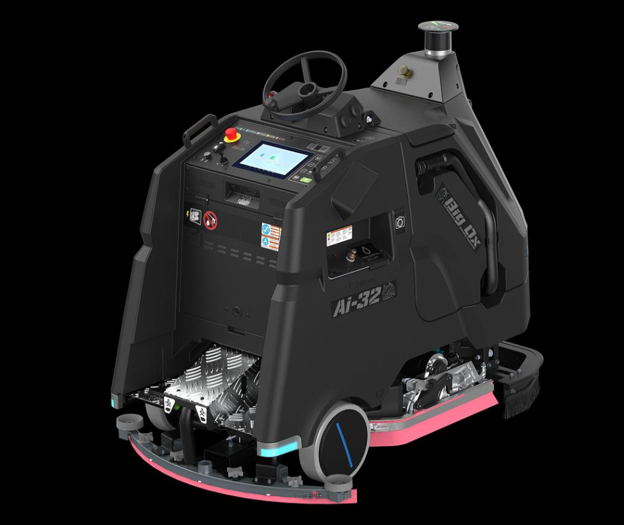



Keeping floors clean in large facilities has always required significant time, labor, and effort. Many companies still rely on manual methods, but with automation technology maturing rapidly, the industrial floor cleaning robot has become a serious alternative worth evaluating.
The real question isn’t just which method cleans better—it’s which one saves more time and money over the long haul. Let’s compare the two head to head.
The Realities of Manual Cleaning
Manual cleaning—whether it’s mops, walk-behind scrubbers, or operator-driven ride-on machines—gets the job done, but it comes with real limitations. Even with an automatic floor scrubber machine, someone still has to physically operate the equipment for the entire cleaning cycle.
Common challenges with manual methods include:
-
Significant labor hours required for every cleaning session
-
Inconsistent results that vary depending on who’s running the machine
-
Long cleaning times across large floor areas, often requiring multiple sessions
-
Operator fatigue leading to missed spots and uneven coverage
The bottom line: manual cleaning ties your floor care quality directly to staff availability and human performance—both of which are variable.
How Automation Changes the Equation
An industrial floor cleaning robot takes a fundamentally different approach. Instead of requiring someone to operate equipment for hours, the system handles the job independently.
Once programmed, an autonomous floor scrubber can:
-
Follow optimized cleaning routes without human guidance
-
Navigate around obstacles—pallets, equipment, people—automatically
-
Deliver consistent, repeatable cleaning results every single cycle
Cleaning becomes a background process that runs alongside your operations instead of competing with them for labor and time.
Time Savings: Where Automation Pulls Ahead
Time is where the difference between manual and autonomous cleaning becomes most obvious.
With manual cleaning:
-
Cleaning has to happen during staffed hours or requires overtime pay for off-hours work
-
Operators can only work so many hours before fatigue degrades performance
-
Large facilities often need multiple cleaning sessions to cover everything
With a robotic floor scrubber:
-
Machines can run extended cycles—some for 13+ hours—including overnight
-
Cleaning doesn’t need to pause for breaks, shift changes, or supervision
-
More square footage gets covered in less elapsed time
Advanced units return to a docking station on their own for water refills, tank dumps, and battery charging, then resume cleaning automatically. That kind of continuous operation simply isn’t possible with manual methods.
Cost Comparison Over Time
Manual cleaning looks cheaper on paper because there’s no big upfront equipment investment. But the long-term cost picture tells a very different story.
Ongoing costs of manual cleaning:
-
Labor expenses for every cleaning shift—often the largest single line item in facility maintenance
-
Training costs for new operators and ongoing supervision
-
Overtime pay for off-hours or overnight cleaning crews
Where automation saves:
-
Dramatically lower labor requirements—fewer dedicated cleaning staff needed
-
Minimal training since the machine operates consistently regardless of who sets it up
-
Consistent performance without additional staffing, overtime, or supervision costs
For facilities that need daily or continuous cleaning, the labor savings alone typically pay back the equipment investment within the first couple of years.
Cleaning Consistency and Quality
This is one of the most underrated differences between manual and autonomous cleaning. Manual methods are inherently tied to human performance, which varies day to day. Even experienced operators rush through routes, skip sections when they’re pressed for time, or clean unevenly when fatigue sets in.
A robotic floor scrubber follows the same optimized route every time, delivering:
-
Even coverage across the entire floor—no missed spots, no shortcuts
-
Reliable, documented cleaning results for safety and compliance
-
Continuous improvement as advanced systems optimize their routes over time
When cleaning consistency matters—for safety, audits, or simply maintaining your facility—automation has a clear edge.
Handling Real-World Industrial Environments
Industrial floors are dynamic. Equipment moves, pallets shift, and the layout can look different from one hour to the next. Manual cleaning handles this through human judgment—the operator sees something in the way and steers around it. That works, but it’s slow and dependent on the operator paying attention.
Modern autonomous floor scrubbers handle dynamic environments differently. Using LiDAR, cameras, and real-time mapping, they detect obstacles and adjust their path on the fly—without stopping, without waiting for help, and without missing a beat. The result is more efficient cleaning with fewer interruptions.
Flexibility vs. Automation: The Trade-Off
Manual cleaning does have one genuine advantage: flexibility. An operator can pivot to a new area on a moment’s notice or address an unexpected spill without reprogramming anything. That’s valuable in certain situations.
But that flexibility comes at the cost of time and consistency. Every time an operator makes a judgment call, there’s variability introduced into the process.
Autonomous systems trade some of that on-the-fly flexibility for reliability and scale. They’re ideal for:
-
Large, open floor areas that need regular, repeatable cleaning
-
Facilities running on tight schedules where cleaning can’t wait for available staff
-
24/7 operations where overnight cleaning needs to happen without a crew
Which Approach Is Right for You?
Manual cleaning may still be the right fit if:
-
Your facility is small enough that a single operator can handle it efficiently
-
Cleaning is periodic rather than daily
-
You already have reliable staff available for cleaning duties
An autonomous floor scrubber for warehouses makes more sense when:
-
You’re managing a large facility that requires daily or continuous floor care
-
Labor is constrained, expensive, or unreliable
-
Cleaning consistency is critical for safety or compliance
-
You want to free your workforce from repetitive, low-value tasks
The Bottom Line
Both approaches have their place, but as facilities grow and operations get more complex, the time and cost advantages of automation become hard to ignore. A robotic floor scrubber delivers more consistent results, runs longer without intervention, and reduces the labor burden that makes manual cleaning so expensive over time.
If you’re evaluating your options, the key question isn’t just “What does the machine cost?”—it’s “What is manual cleaning costing me right now, and what will it cost me next year?”

