

Deciding when to replace garage door cables spring assemblies is critical for keeping your garage door operating safely, evenly, and without sudden mechanical failure. High-tension steel lift cables work alongside your torsion or extension springs to carry the heavy weight of the door panels up and down every single day. When those braided steel strands fray, rust, kink, or slip off the cable drums, ignoring the problem risks a snapped cable, a crooked door, or severe injury, making timely action to replace garage door cables essential for protecting your home and family.
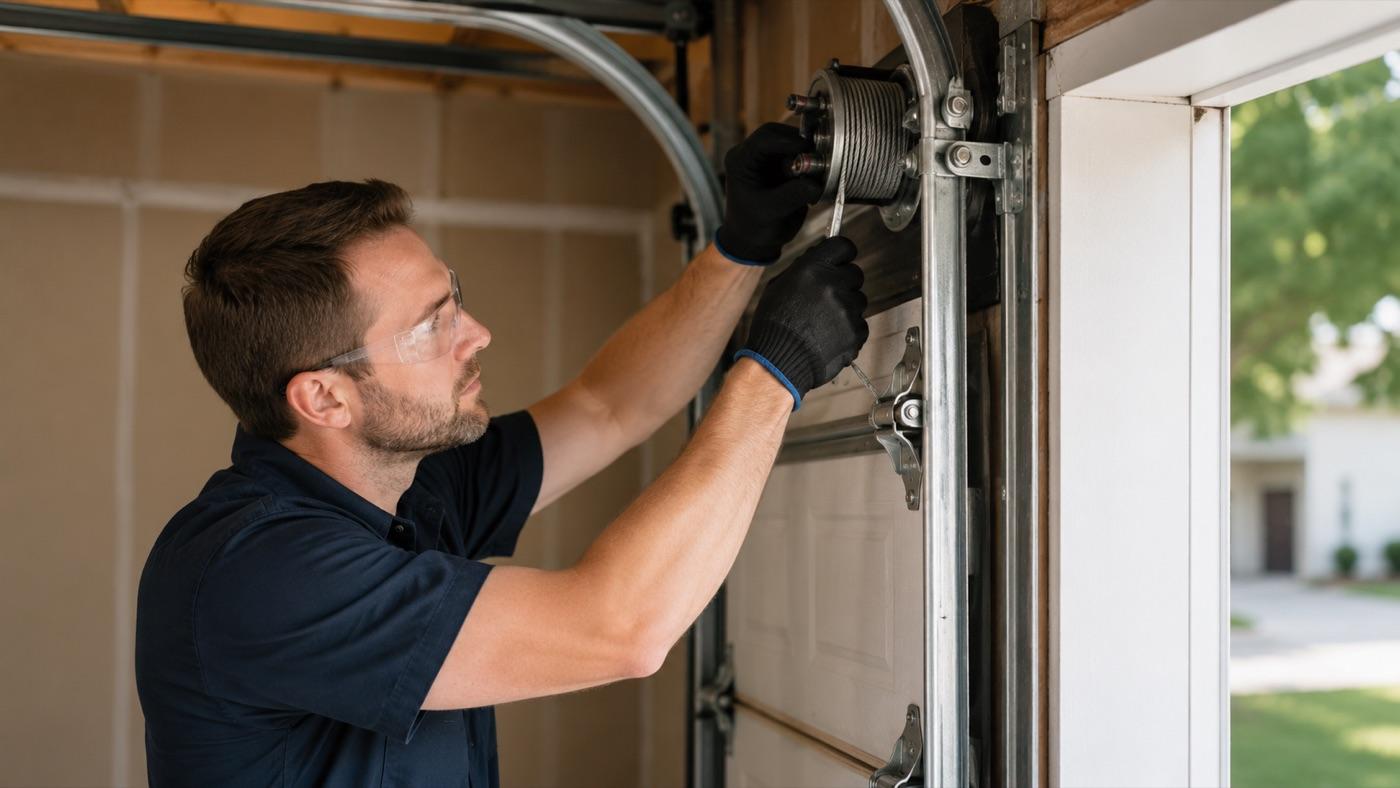
In this guide, we cover how lift cables interact with your spring system, clear warning signs of cable wear, safety risks to watch out for, and how professionals restore balanced operation.
How Garage Door Cables and Springs Work Together
Garage door lift cables are braided stainless or galvanized steel wires anchored at the bottom corner brackets of the door. Their upper ends wrap around grooved cable drums mounted on the horizontal torsion shaft above the door, or route through pulleys on extension spring systems.
When the door lowers, the springs wind up or stretch to store energy while the cables pay out smoothly. When the door opens, the springs release stored force and pull the cables upward, lifting hundreds of pounds of door weight in unison.
Key Takeaway: Lift cables and springs operate as a matched counterbalance team. A frayed cable or weakened spring on one side throws the entire door out of balance and strains the opener motor.
Signs Your Garage Door Cables Need Replacement
Because lift cables sit under heavy tension during every cycle, spotting early damage prevents sudden snaps and off-track door jams.
-
Frayed Strands or “Fishhooks”: Look closely along the cable length for tiny broken wire ends sticking out like fishhooks. Even a few frayed wires signal metal fatigue and uneven load distribution.
-
Rust, Corrosion, or Moisture Staining: Water pooling near the garage floor or winter road salt often corrodes the lower cable ends first, weakening steel strength long before a snap occurs.
-
Slack or Loose Cables When Door Is Closed: Cables should sit taut once tensioned properly. Slack loops when the door is down point to slipping drums, stretched cables, or spring issues.
-
Crooked Door Travel or Uneven Gaps: If one side of the door rises faster than the other or leaves a gap against the floor, a cable may be fraying, stretching, or riding unevenly on the drum.
Cable Replacement vs Full Spring & Hardware Servicing
When you replace garage door cables spring health and drum condition should be evaluated at the same time so new cables are not installed onto worn-out components.
Why Cable Work Requires High-Tension Safety Care
Many homeowners wonder if swapping lift cables is a quick weekend DIY task. In practice, bottom corner brackets and cable drums are directly tied to high-tension springs storing enough force to cause serious harm if released improperly.
-
Unwinding Spring Tension First: Technicians clamp the door securely and use steel winding bars to safely unwind torsion spring tension before unbolting drums or bottom brackets.
-
Matching Cable Length and Diameter: Replacement cables must match the exact door height, lift type, and drum size so both sides wind evenly without overlapping or tangling.
-
Securing Drums and Re-Winding Springs: After routing the new cables cleanly onto the drums, technicians re-tension the springs to exact door weight and verify level travel.
-
Testing Balance and Safety Reversal: A final manual balance check and photo-eye reversal test confirm smooth, safe operation before returning the door to daily use.
Safety Warning: Never unbolt bottom corner brackets, loosen cable drum set screws, or unwind springs without proper winding bars and training. Stored spring force can release violently and cause severe injury.
Protect Your Garage Door With Timely Cable Care
Knowing when to replace garage door cables spring systems depend on saves you from sudden door jams, crooked panels, and costly emergency repairs. Inspecting your cables periodically for fraying or rust and calling a qualified technician at the first sign of wear keeps your garage door balanced, safe, and dependable year-round.